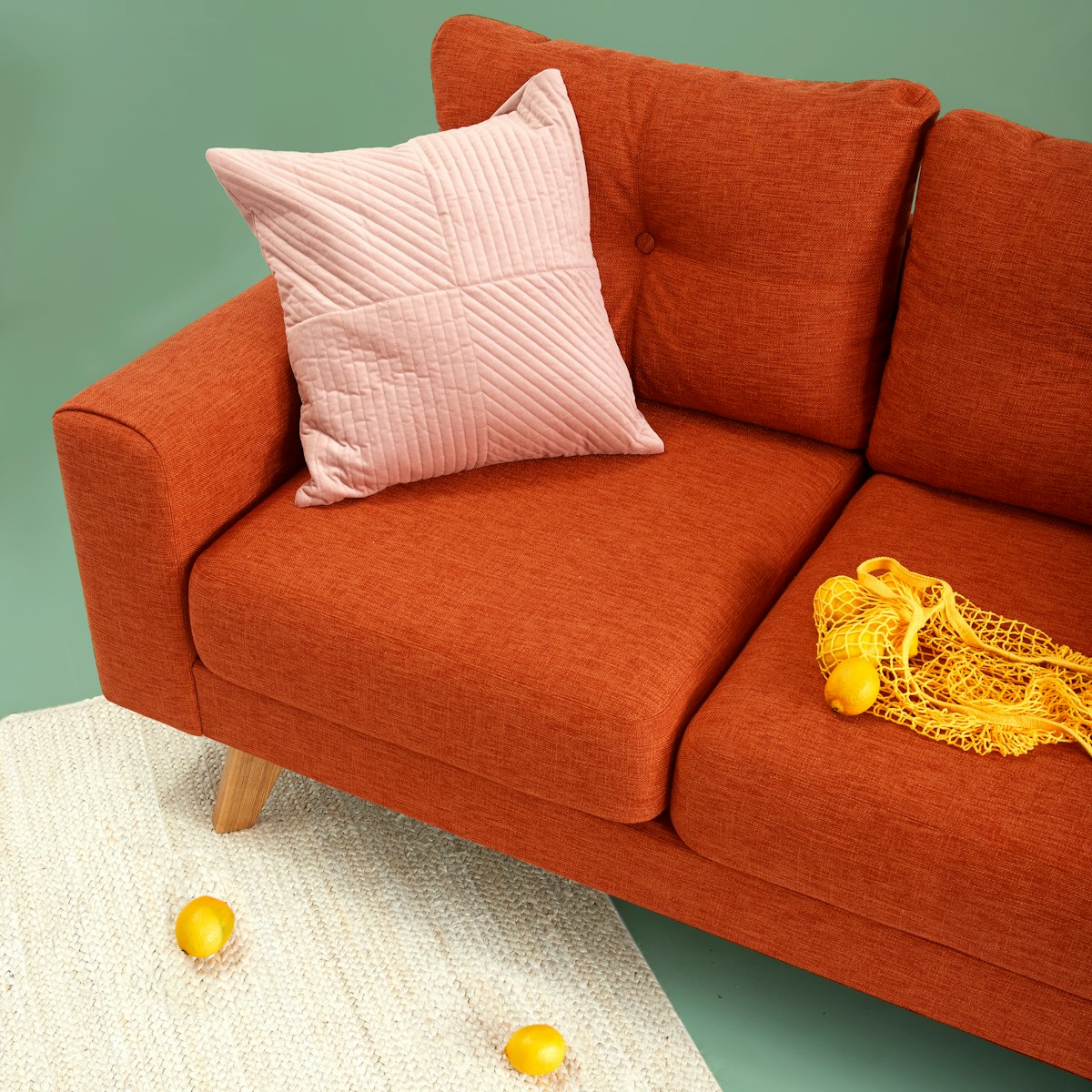
The coffee table is the worst first purchase in furnishing. Buy it before
the sofa and you'll spend a decade choosing seating that fits around it.
After furnishing three apartments from empty and hearing out enough regretful
buyers, the pattern is hard to miss: regret comes from buying in the wrong
sequence, not from the wrong store.
Week 1–2: Buy the mattress and the sofa
Buy the mattress and the sofa first. They're the two objects you use most
and they set the scale for every room they touch. Mattresses need a body
test — 15 minutes in a showroom, minimum, or a brand with a real 100-night
trial. Sofas need a tape measure: seat depth against your leg length, not
just room dimensions. Everything else can wait, and should.
Week 3–4: Live with almost nothing
This is the step everyone skips and it saves the most money. Two weeks of
eating at a folding table teaches you where the dining table actually needs
to go and how big it truly needs to be. Note where you set down your phone,
where the light is bad at 6 p.m., where you trip. Those observations are
worth more than any showroom.
Month 2: Buy what holds things before what displays them
Buy the wardrobe, the dresser, the bookshelf — the pieces that hold things —
before the coffee table and side tables, the pieces that only display them.
Storage solves the mess that makes people buy extra furniture later. And
storage is the category where secondhand is strongest: solid-wood dressers
cost a third of retail used and outlive most new ones.
Month 3: One anchor, chosen with intent
One object that earns the room its character — a dining table, a statement
chair, a proper rug. Spend on this one thing what you saved on the others.
A room with ordinary furniture and one excellent piece reads as curated; a
room where everything cost the same mid-range amount reads as a flat-pack
showroom.
Month 4 and later: Fill only what's still missing
Only now buy the nightstands, the coffee table, the floor lamp. By this
point you know the room's real traffic patterns and the sizes that fit. If a
gap never bothered you in three months of living there, leave it empty.
Three rules that hold the timeline together
- Nothing decorative in the first month. Everything you buy early
should carry its weight in function.
- Measure the room once, then measure the object's footprint, not its
photo. Scale is the most common online-order failure.
- Keep a running list. Impulse is why the regret purchases exist; a
30-day wait list is the cheapest filter in furnishing.
Furnishing slowly feels inefficient for exactly one month. After that,
every piece fits because it was bought for the room you actually live in,
not the one you imagined on moving day.