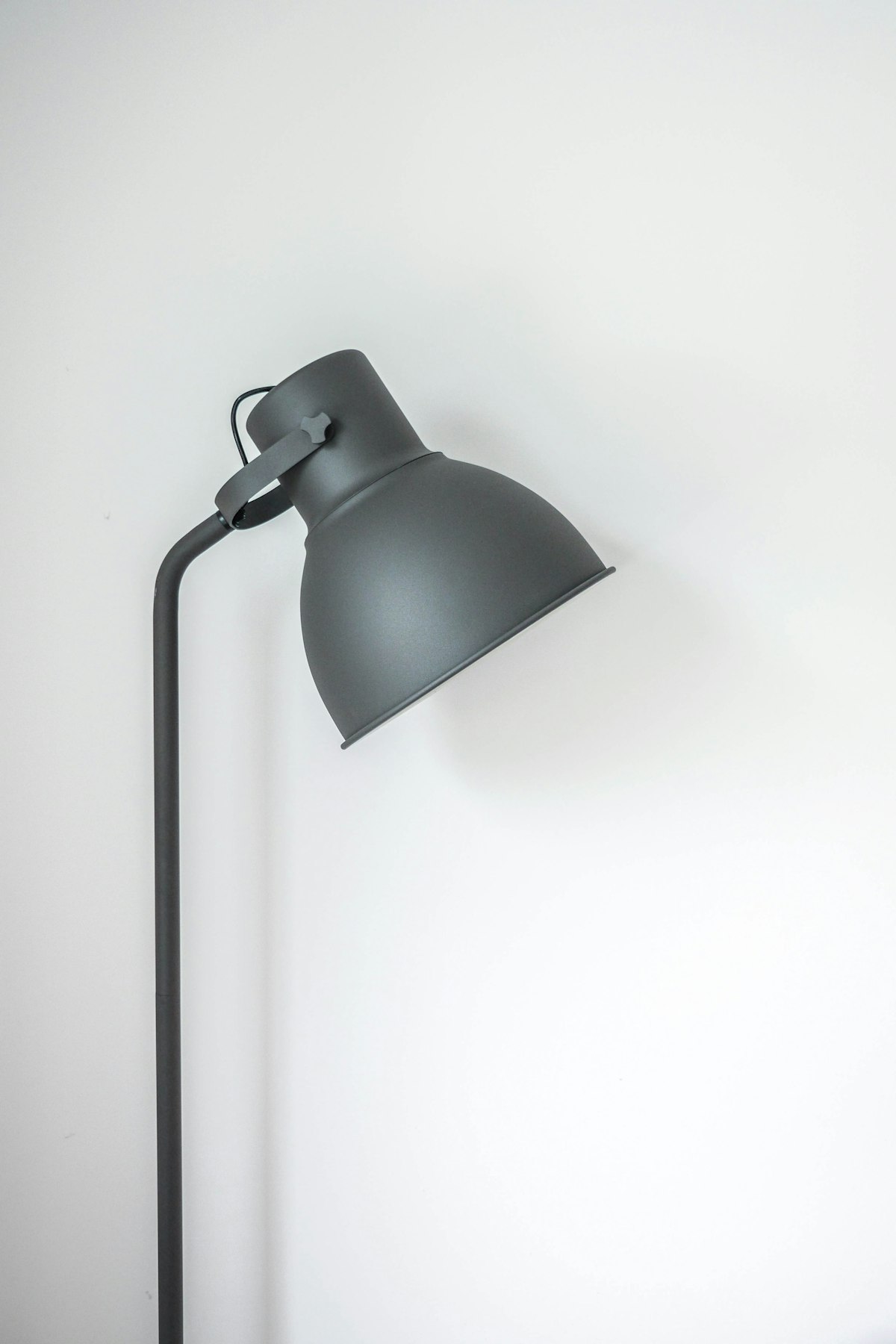
A floor lamp is the fastest way to make a living room feel finished, and also
the easiest purchase to get wrong. Most "warm white" lamps are either too dim
to read by or too yellow to live with. The bigger problem is rounding: "2700K"
on a box is a claim, not a measurement, and it deserves a check before you
assume the glow will match the rest of the room.
The three below earned their picks on brightness and dimming behavior, with
build quality as the tiebreaker, judged from manufacturer specs, independent
measurements where they exist, and the pattern across owner reviews.
How they were picked
- Color temperature: 2700K–3000K as
rated by the manufacturer and corroborated where independent measurements
exist; anything specified above 3200K at full brightness was out.
- Dimming: smooth stepped or continuous dimming, no flicker complaints in
owner feedback, no audible buzz at the lowest setting.
- Build: a weighted base and no wobble at full height.
- Value: honest pricing against light output. A $250 lamp putting out 700
lumens loses to a $100 lamp doing the same.
One method note behind those criteria: no lamp here was judged on a single
review, good or bad. A five-star review written the night a lamp arrives
says little about year two, and a one-star review from a doa unit says
little about the model. The weighting runs manufacturer specs first,
independent measurements where they exist, then the shape of the owner
record over months — which is why every pick below cites what owners say
after living with the lamp rather than on unboxing day.
Warm white is a claim, not a setting
Every lamp in this guide has an integrated LED, which changes what "warm
white" means. There is no bulb to swap. The diodes behind the shade are the
bulb, and they are the lamp's color temperature for life. The 3000K ratings
below are manufacturer claims; independent measurements exist for some lamps
and not others, so owner reports after months of use carry the corroborating
weight here.
Dimming style is the more reliable signal on the listing. A lamp that steps
through three brightness levels has simple driver electronics, which usually
means a lower price and fewer failure points. A lamp with continuous rotary
dimming gives fine control between full output and candlelight, and owners of
those lamps rarely go back. Neither approach guarantees warmth at the bottom
of the range, which is why the review record matters more than the spec
sheet. Brightness and warmth are separate specifications — one lives in
lumens, the other in Kelvin — and our
lumen-claims breakdown covers how the
first number gets inflated in marketing copy.
Verification is a short checklist. Independent measurements first, where they
exist for the model. Owner photos taken at night second, because a review
photo shot in daylight tells you nothing about evening color. A retailer
with a real return window third, since warmth at the bottom of the dimming
range is the one thing no listing shows honestly. Ten minutes of that
beats any amount of spec-sheet comparison.
The short version
| Lamp | Max lumens | Color temp | Dimming | Price |
| --- | --- | --- | --- | --- |
| Brightech Leaf LED Pharmacy Floor Lamp | 1150 | 3000K | 3-way touch | $70 |
| addlon Dimmable Industrial Floor Lamp | 900 | 3000K | Rotary, continuous | $32 |
| Brightech Sky Flux LED Torchiere | 2700 | 3000K | Touch | $75 |
Brightech Leaf LED Pharmacy Floor Lamp — best overall
The strongest all-rounder: a warm 3000K output across all three touch dimming
steps (100/50/25%), backed by a 1,150-lumen rating. That is enough to work by
over a reading chair, which is the honest bar for a pharmacy-style lamp — the
adjustable arm exists to put light on a page, and this output puts it there
without strain. Owner reviews across Amazon and Macy's average around 4.7
stars, with buyers consistently praising the sturdiness, the weighted base and
the arm adjustment. The recurring complaints are minor assembly quirks and the
integrated LED: when the diodes
eventually fade, you replace the lamp rather than a bulb.
Brightech's 3-year warranty covers exactly that failure mode, which is longer
than most competitors bother with. The three touch steps map cleanly onto a
day: full output for work and cleaning, half for an ordinary evening in the
chair, quarter for the last hour before bed when even half feels loud. Lamps
rarely fail on brightness; they fail on the two low steps, and this one keeps
its 3000K rating through all three.
At $70 the Leaf also reads as furniture
rather than equipment, which matters in a room you sit in every evening.
addlon Dimmable Industrial Floor Lamp — best budget
At less than half the price of the Leaf you give up the adjustable arm. What
you keep is the dimming. Owners of addlon's
rotary-dimmer lamps consistently like the
continuous control, where low is properly low rather than a slightly less
bright version of high. That distinction sounds subtle until you spend an
evening with a stepped lamp that refuses to drop below reading-light levels
when what you want is a television glow.
There is a wiring benefit hiding in that rotary design too. Because the
dimming is built into the lamp, the whole thing runs off a plain wall socket
with no dimmer circuit, no compatible-bulb hunting and none of the flicker
complaints that follow badly matched wall dimmers. The lamp is the dimmer,
which is one fewer thing to fail.
The honest caveats in the review record: some owners find the shade cheaply
made, and even fans describe the max output as ambience rather than full-room
light. At 900 lumens that matches the spec. This is a corner lamp — a lamp
that marks off part of a room and warms it — not a primary reading light and
not a substitute for ceiling fixtures.
Brightech Sky Flux LED Torchiere — best for ambient
A torchiere-style uplight that washes the ceiling, rated at 2,700 lumens —
bright enough to light a large room on its own. The physics of the design do
real work here: bouncing light off the ceiling diffuses it the way a shade
never quite manages, so one lamp can carry a room's entire ambient layer
without glare at eye level. The uplight configuration also hides the source
completely, which matters more than you'd expect in a small room where a bare
diode panel at eye level dominates the view.
The touch control takes a night to learn, owners say — tap to step through the
light settings, hold to sweep brightness up and down — and then becomes the
feature they like most. Two things to know from the review record: the lamp
reverts to warm white after a power cut rather than remembering your setting,
and a minority of long-term owners report the touch switch or the LEDs acting
up after a year or more. It adds a glow layer rather than task light, so it
pairs well with a reading lamp instead of replacing one.
What the review record flags
Across the three lamps, the recurring complaints fall into a short list
worth reading before purchase rather than after. The Leaf's assembly quirks
show up early and get solved early; nobody reports them after month one. The
addlon's shade is the most divisive single component in this comparison —
some owners like how it diffuses, others call it cheaply made, and at $32
the fix is a lampshade swap rather than a return. The Sky Flux's two
long-term issues, the post-power-cut reset and the minority of touch-switch
or LED failures after a year or more, are the reason its warranty terms
deserve a read.
The pattern across all three: failures cluster in controls and shades, not
in light output. Warmth problems — the reason most people return a warm-white
lamp — are absent from the owner record for these picks, which is the
strongest endorsement in this whole comparison.
Matching output to the room
Lumen ratings translate to rooms roughly like this, with the three lamps above
serving as anchors. Around 900 lumens is ambience: enough to take the edge off
a dark corner and mark out a seating area without pretending to light it.
Around 1,150 lumens supports reading at a chair, especially with a focused
shade directing output downward. Above 2,500 lumens in an uplight
configuration, a single lamp can serve as the primary evening light source.
Two placement notes from the review patterns. Shaded lamps flatter a corner;
torchiere lamps want open ceiling within a few feet of the opening, and
tucking one behind a tall plant kills the bounce that makes them work. And a
pharmacy arm earns its keep beside a chair rather than behind a sofa — the arm
exists to reach over your shoulder toward the page. Our
shade-size guide covers proportion if you
are pairing a new lamp with furniture you already own.
A floor lamp also earns its place by competing with the ceiling fixture
rather than duplicating it. An overhead light lights the room; a floor lamp
lights the part of the room where you are. That is why the combination of a
dim overhead circuit and one well-placed floor lamp beats any single bright
source for evening use, and why the lamps above all dim so low. The goal is
a room with layers, where the brightest layer can be switched off entirely
by 9 p.m.
One lamp, chosen well
If you can only buy one, buy for the room you sit in at night, not the room
that photographs well. Warm light rewards rooms you actually use, and the
lamp that gets switched on most is rarely the one with the best spec sheet —
it is the one within arm's reach of your chair. Find that chair first, then
buy for it.
The order of operations from there: measure the corner before ordering,
because a 20-inch pharmacy shade swallows a small footprint; check the
return window, since warmth is a judgment made at night in your own room,
not in a store; and use the low end of the dimming range during the trial,
because that is where a warm-white claim goes to be tested.
When the budget reaches design-house territory, our
FLOS review asks whether the icons earn
their premium.