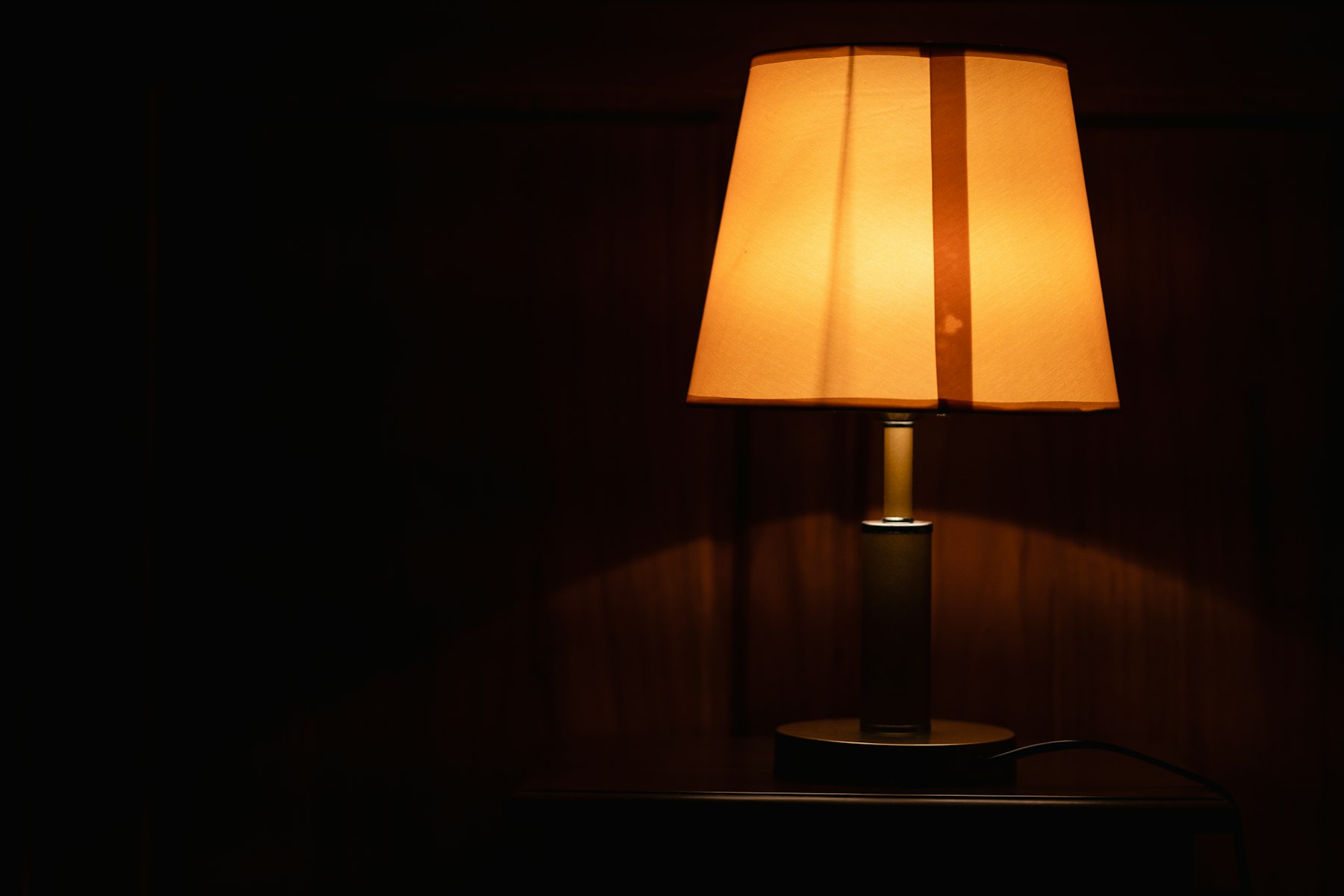
A lamp with the wrong shade can be perfectly built and still look wrong from
the doorway. Proportion is the usual suspect: the shade is either swallowing
the base or balancing on it like a hat two sizes too small. The fix is less
mysterious than it looks, and it starts with a tape measure rather than an
opinion.
The width rule
For a table lamp, start with two checks and let the smaller answer win:
- The shade's bottom diameter should be roughly equal to the base's
height.
- It should be about twice the width of the base at its widest point.
A squat ceramic base 14 inches tall and 7 inches across passes both tests
with a shade around 14 inches. A tall, narrow candlestick base fails the
first check with any shade that wide, so it typically wants a shade closer
to its own width. When the two numbers conflict, the lamp is unusual by
design — follow the base, not the average.
Measure the base, then write it down
Two numbers decide everything: the base's height from tabletop to its top,
and the base's width at its widest visible point. Measure both before you
shop, because in a store or on a product page every shade looks plausible
next to a lamp it has never met.
Measure the shade the same way a seller does: bottom diameter first, then
top diameter, then height. Almost every listing quotes these three numbers
in that order, and a shade described only as "medium" or "large" is a shade
being sold to people who did not measure. The bottom diameter is the number
that plugs into the width rule; the top diameter mostly tells you how much
light spills upward instead of down.
Write the base numbers on your phone and refuse to buy a shade whose bottom
diameter is more than an inch or two off the smaller of the two. An inch of
diameter is visible from across a room; half an inch is not worth another
shipping cycle.
Floor lamps
Floor lamps carry more shade because they have more stem. Most work with
shades 16 to 20 inches wide; going much beyond 20 inches starts to look
like patio furniture indoors. Keep the bottom edge near seated eye level so
the light lands on reading and conversation, not on the ceiling — this is
the same logic behind layering light properly, which we cover in
layering living room lighting.
The seated-eye-level detail is doing more work than it seems. A floor lamp
shade hung above eye level turns into a glare source for everyone on the
sofa, because the bulb sits in direct view. The same shade lowered four
inches becomes invisible and the light it throws stops competing with the
screen. If a floor lamp annoys you in a way you cannot name, check whether
the shade bottom is above your sightline before you blame the bulb.
Height and bulb exposure
Shade height decides how much light escapes top and bottom. A drum shade
12 inches tall spills light generously in both directions; a tapered shade
8 inches tall concentrates it downward and reads as moodier. The
non-negotiable part: from where you actually sit or stand, the shade should
hide the socket and the harp, and the bulb with them. Check from across the
room, not beside the lamp — a bright dot at eye level from the sofa is the
single most common exposure problem. Pair the exposed result with the right
color temperature, since a bare-looking edge shows bulb tint more than a
deep shade does: see choosing color temperature.
If the bulb peeks out at your normal sitting height, you have three moves,
in order of cost: lower the shade on its harp, raise the harp to a taller
one, or buy a taller shade. Moving the shade down costs nothing and solves
the problem more often than people expect, because harps ship set for the
shade that came with the lamp, not for the one you replaced it with.
Shade shapes change the math
Two shades with identical bottom diameters can behave like different lamps.
A drum spreads light evenly up and down, which suits rooms that need general
glow from a side table. A tapered shade, narrow at the top, pushes most of
its light down onto the surface beside the lamp and leaves the room dimmer —
the moodier read mentioned above is geometry, not atmosphere.
That is why shape is a lighting decision before it is a style one. Matching
a pair of bedside lamps? Tapered shades keep the light on the book instead
of on the sleeping partner. Filling a dark corner that needs to feel
furnished rather than lit? A drum throws light wider and makes the corner
part of the room. Decide what the lamp is for, then pick the shape that
does it.
Harps, finials and fitters
The reason a shade "doesn't fit" is almost always hardware, not size. A
standard shade sits on a harp — the wire hoop rising from the socket — and a
finial screws down through the top to hold it. The bulb sits below the
shade's top, which is why shade height and harp height have to agree.
Harps come in incremental heights, commonly sold in pairs with the lamp, and
a taller or shorter harp is a two-dollar part that rescues a shade otherwise
half an inch too tall or too short. Before replacing a shade you like,
replace the harp. And when a shade slides onto the socket directly with no
harp, that is an uno fitter — a different mounting, not a defect — so check
which one your lamp takes before ordering.
The repeat offenders
- Measuring the top instead of the bottom. Tapered shades are sized by
their bottom diameter. A shade that tapers to a narrow top can still be
the right size overall.
- Matching width to the harp, not the base. The harp is hardware, not
a proportion guide.
- Going too tall to "get more light." A shade so tall that it exposes
the bulb fixes one complaint and creates a worse one.
- Swapping in a shade without re-checking the bulb. A wider, taller
shade can swallow a bulb meant for a small one, dimming the whole lamp.
If the result feels dim at a desk or bedside, start again from a size
meant for the job — our bedside table lamp guide
covers the sizing there in context.
Bring both numbers — base height and base width — when you shop, and the
shade aisle stops being guesswork.