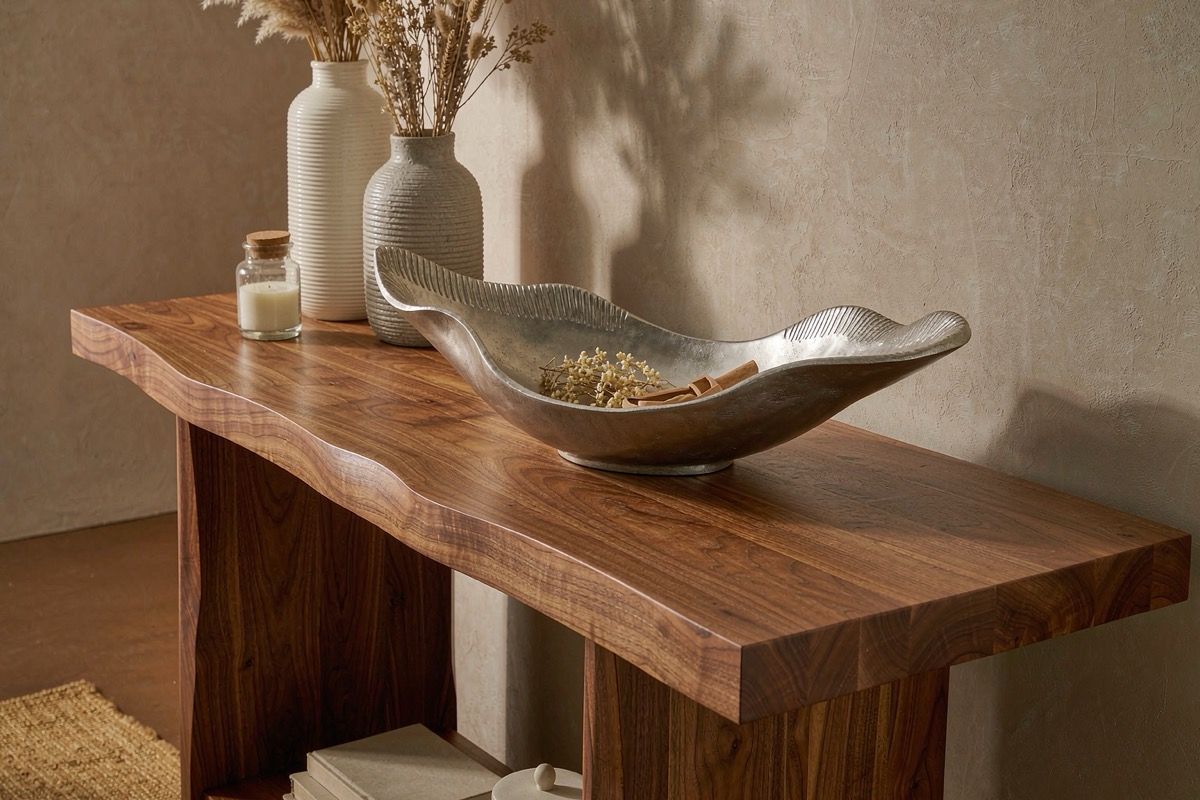
The most misleading thing about a serving bowl is that it looks like one
material. The lustrous silver-colored bowl that goes from freezer to oven
and never tarnishes is not silver, not steel and not aluminum in any pure
sense — it is an alloy, a deliberate blend engineered so that no single
metal's weakness survives. Serveware is one of the few places where
household buyers touch metallurgy directly, and the difference between a
bowl that lasts decades and one that pits, rusts or leaches is written in
the alloy composition, which almost never appears on the box.
Why pure metals do not work
Pure metals fail as serveware for predictable reasons. Pure iron rusts.
Pure aluminum is soft, scratches easily and reacts with acid. Pure silver
tarnishes and costs more than the meal it serves. Pure tin is too soft to
hold a shape under a serving spoon. Alloying fixes this by mixing a base
metal — chosen for cost, weight or conductivity — with small percentages
of others that cancel specific weaknesses. The result is a material whose
surface chemistry, hardness and reactivity are design decisions, which is
why two bowls that look identical can behave completely differently against
a vinaigrette.
Cast aluminum alloys: the lightweight conductor
Aluminum conducts heat better than almost any common serveware metal and
weighs a fraction of steel, which makes it the natural base for large
serving pieces. Unalloyed, it has two problems: softness and reactivity
with acid. Serveware alloys solve the first by adding harder metals into
the blend and the second by formulation and surface treatment. The most
famous example in American housewares is the alloy developed in 1953 by
Martin Eden, a metallurgist from the Los Alamos laboratory, for the young
Nambe company in New Mexico — an eight-metal blend with aluminum at its
core, sand-cast and hand-polished to a silver-like luster. Pieces made
from it hold temperature in both directions, chilling salads and keeping
sides hot, and they sit in the Museum of Modern Art's collection. The care
rules that come with it are not fussiness; they are the alloy's operating
manual: no dishwasher, because caustic detergents attack the polished
surface, and no microwave, because dense metal reflects the energy.
The general buying rule for cast-alloy serveware is to treat surface
integrity as the product. A polished alloy surface that stays intact is
stable and food-safe for serving; a surface that has been scoured by
abrasives or dishwasher detergents is both cosmetically ruined and more
likely to interact with acidic food. This is why the care label is a
materials specification in disguise.
18/10 stainless steel: the numbers are the recipe
Stainless flatware and serveware carry grade numbers that are actual
compositions. The first number is chromium, the element that makes steel
stainless by forming a self-repairing oxide film on the surface. The second
is nickel, which brightens the finish, adds corrosion resistance and gives
the alloy its workable ductility. So 18/10 means 18 percent chromium and 10
percent nickel; 18/8 is nearly the same steel with slightly less nickel;
18/0 — common in budget flatware — contains no nickel at all, which is why
it looks duller, scratches faster and eventually shows rust spots at the
edges of worn areas.
For serveware, the grade predicts three things a buyer can verify by eye
and hand. Brightness: nickel is what gives 18/10 its white-silver luster
versus the grayer cast of nickel-free steel. Corrosion behavior: nickelfree
grades pit and spot first, especially around salt and prolonged moisture.
Weight and stiffness: higher-nickel alloys hold thinner elegant profiles
without bending. There is no reason to buy 18/0 for anything that touches
food daily, and the grade stamp — usually on the underside of the piece —
is the fastest honesty check in the entire category.
Pewter: the old alloy, rebuilt without lead
Pewter is tin-based, and its history is a materials-safety story in one
line: traditional pewter sometimes contained lead, and modern pewter does
not. Contemporary food-grade pewter runs roughly 92 percent or more tin,
alloyed with small amounts of copper and antimony for hardness. The result
does not tarnish like silver, develops a soft gray patina instead, and is
still soft enough to dent — which is why pewter tankards and serving
pieces carry the surface wear of use rather than the hard gloss of steel.
The safety rule for pewter is about age and provenance, not the metal
itself. Unmarked antique pewter of unknown composition belongs on a shelf;
modern pewter from an established maker, sold explicitly as lead-free, is
fine for food. The same provenance logic applies to anything plated —
the base metal and plating composition matter more than the maker's name.
Lined copper: beautiful, and never bare
Copper sits in serveware as the luxury case with a structural asterisk.
It conducts heat better than any metal on the list, which is why cooks
want it, but bare copper is reactive with acid and can reach toxic levels
of transfer — so every legitimate copper serving piece is lined, with tin
or stainless, and the lining, not the copper, is the food-contact surface.
A copper bowl with a worn-through lining is not a cosmetic problem; it is
a use problem. The buying rule mirrors cast alloy: the food-contact
surface and its condition are the product.
What food-safe actually means
Food-safe is not a marketing adjective; it is a migration standard — how
much of the metal transfers into food under defined acidic, timed
conditions, with regulatory limits set by agencies such as the FDA and
their European counterparts. Alloys sold for food contact are formulated
to pass those limits with their surfaces intact. This is the unifying
logic across all four metals above: a food-safe alloy is safe as
manufactured, and care rules exist to keep the surface that was tested in
the condition it was tested in. Strip the surface with a dishwasher or an
abrasive cleaner and you are no longer eating off the certified material.
That is also the frame for judging designer serveware of any brand,
Nambe included: the alloy, the finish and the care requirements are one
system, priced and warranted as a unit. Three questions sort any metal
serving piece before purchase. What is the composition, and is it stated
in numbers rather than adjectives. What touches the food — base alloy,
lining, or plating — and is that surface intact by design. What are the
care rules, and do they read like a materials specification or like a
suggestion. A maker that answers all three in writing has nothing to hide
in the metallurgy.