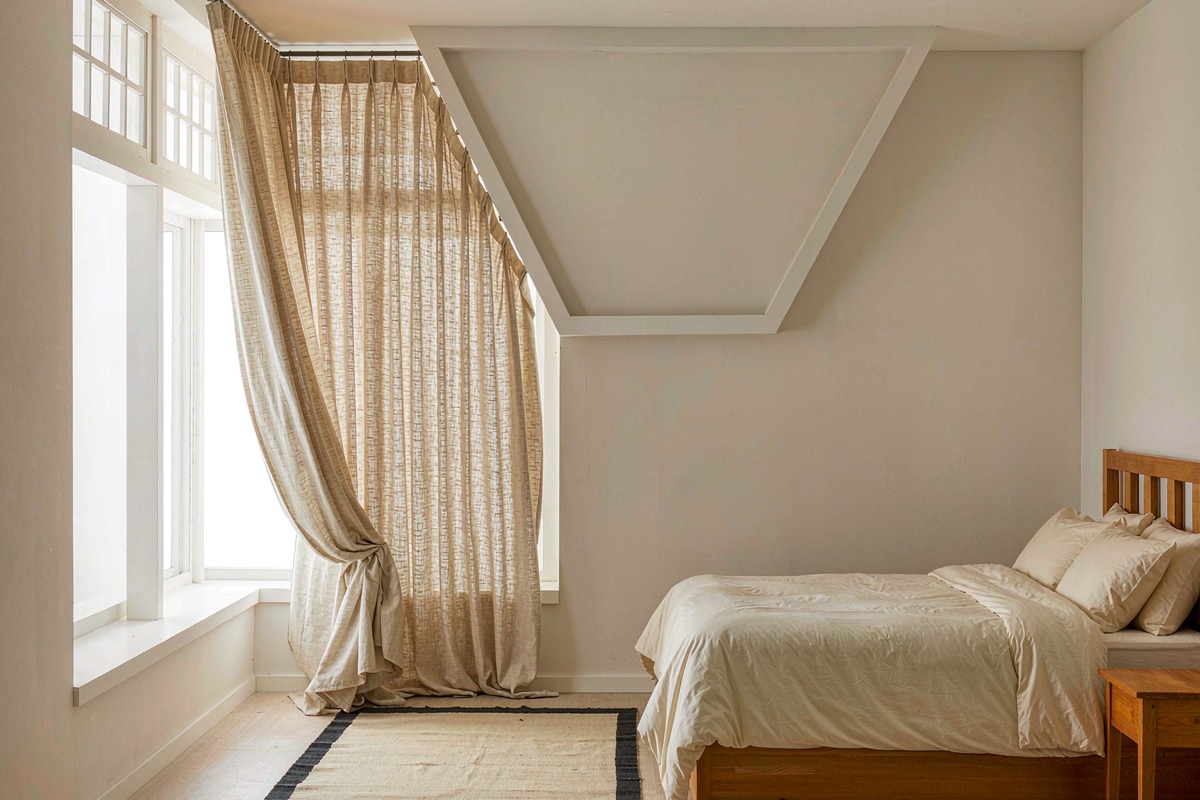
A $25 curtain panel and an $80 one hang from the same rod and look
similar in a listing photo. The difference lives in a handful of
manufacturing decisions — fabric weight, dye method, hem construction,
the blackout layer — and the trick to buying well at the budget tier is
knowing which of those decisions you can cheaply live without and which
you cannot. Get it right and the cheap panel is one of the best value
positions in home furnishing. Get it wrong and you own a wrinkled,
blue-gray-glowing disappointment.
Where the money actually goes in a curtain
Four things set a panel's manufacturing cost: the fabric's weight and
weave, the dyeing method, the blackout construction if any, and the
stitching at the hems and heading. Everything else — packaging, branding,
the listing photography — is overhead that scales with marketing, not
quality. Budget panels get cheap by compressing all four, but not
equally, and that unevenness is the whole game.
Corner-cutting that matters
Fabric weight is the cut that matters most. Inexpensive panels run thin —
140 to 180 grams per square meter where mid-tier drapes run 220 and up —
and thin fabric fails in three visible ways: it lacks the drape that
makes folds fall in soft S-curves instead of stiff zigzags, it transmits
more light even when nominally blackout, and it flutters against an open
window like a flag. Weight is the one spec rarely printed on budget
listings, which is itself information — sellers of heavy fabric state it.
Blackout construction is the second honest cut. True blackout requires
either a foam or acrylic coating on the back, or a third woven layer
sandwiching a dark yarn — both add real material cost. The budget move
is a denser weave and a called-it-blackout listing, which produces the
75%-block reality that dominates the tier: fine for daytime TV, defeated
by a streetlight at the panel's edge. The flagship of the category's
best-seller, a linen-textured panel from Jinchan, blocks about 75% of
light — and that panel has roughly 14,650 Amazon ratings averaging 4.5
stars, which tells you how many buyers find 75% perfectly adequate. The
buyers it fails are the ones who needed 100% and did not know the
difference until the first dawn.
Hem and seam quality is the third. Cheap construction shows as single-needle
stitching at a narrow seam allowance, loose threads at the heading, and —
most annoying — occasional panel-length mismatch within a pair, which
only becomes visible once both panels hang side by side. The fix costs
nothing at purchase time: check both panels against each other before
hemming or trimming anything.
Dye accuracy is the fourth, and it is uniquely a budget-tier problem.
Color runs in large lots, and budget listings reorder often, so the shade
that arrives can drift noticeably from the photo — enough that some
owners reorder to match. The defensive play costs one panel's price:
order a single panel first, hold it in the room's light, then buy the
rest.
Corner-cutting that does not matter
The compression-fold shipping creases that dominate budget reviews look
alarming in the unboxing photo and disappear after ten minutes with a
steamer. Polyester — the category's standard fiber — takes a pressed
edge well and holds it, so the crease complaint is an inconvenience
priced into the tier, not a quality signal.
Synthetic fiber itself is the second non-cut. Linen looks expensive but
wrinkles, shrinks and fades; polyester blends photograph equally well,
clean in a machine, and resist sun fade better than natural fibers at
any price. A polyester curtain is not a cheaper version of a linen
curtain — it is a different material with a better maintenance profile
for exactly this use.
Rod-pocket versus grommet construction is the third. Both are valid
heading styles at both price tiers; grommets read modern and slide
easily, rod pockets read soft and traditional and cost pennies less.
Neither predicts how long the panel lasts.
Measuring is the other corner that costs nothing to cut correctly, and
budget panels punish sloppy math harder than premium ones. Width should
total two to two-and-a-half times the window's width across all panels
combined — a rule that exists because the listed width of a panel is its
flat measurement, and fabric only drapes into folds when there is more
fabric than window. Length runs floor-length or to the sill; budget
lines typically stock 45 to 108 inches, so measure before browsing
rather than after, because the size you need is often the one out of
stock. Panels in this tier commonly run 38 to 100 inches wide and are
sold as singles or sets, which makes the arithmetic easy to get wrong
and the returns slow enough to matter.
The worked example
Jinchan's best-selling line illustrates both sides of the ledger. The
design side is where the brand spent its money: linen-textured weaves,
florals and embroidery that the plain-panel rivals in the same price
bracket — Nicetown's and Deconovo's darkness-first catalogs — mostly
skip, and the owner record rewards it, with the flagship line's rating
volume and consistency in best-seller territory and its gray damask
full-blackout model holding 4.6 stars across roughly 10,900 more ratings.
The cost-cutting side shows up exactly where this article predicts:
compression creases on arrival, occasional color drift from listing
photos, and loose threads or mismatched panel lengths in the workmanship
complaints. Nothing in that complaint profile is unusual for the tier —
what the brand demonstrates is that a budget manufacturer can spend on
design and dye variety and still deliver a 75% blackout panel whose
shortcomings are the tier's standard ones.
The buying checklist
Four checks separate the good cheap panel from the bad one. Read the
format line — per-panel or per-set — before comparing any prices. Hunt
for a fabric weight; if it is not stated, treat reviews mentioning
"thin" or "flows nicely" as the measurement. Decide honestly whether
your room needs 75% or 100% blackout, and buy the construction — coated
or triple-weave — that matches. And order one panel before committing a
whole window to an unverified shade.
Hang high and wide regardless of price: mounting the rod 4 to 6 inches
above the frame and extending it past the window on both sides adds
apparent height and light control that no fabric upgrade can, and it is
the cheapest trick in window treatment — the part of the job that costs
nothing and looks like everything.