Blackout curtains fail in predictable places, and the top hem is usually the
first. When CNN Underscored ran a flashlight behind a lineup of blackout
panels, most of them didn't block the beam at all — which matches the
complaint pattern across thousands of owner reviews. A dark room is the
cheapest sleep upgrade there is, but most "blackout" panels are
room-darkening at best, and the difference shows up at 5:40 in the morning.
What separates real darkness from blackout-look
- True blackout, not blackout-look. Shine a phone flashlight directly
behind the fabric. Reviewers at CNN Underscored found only one panel in
their test lineup let no light through, and "room darkening" fabric fails
this check immediately.
- Coverage beyond the panel. Light leaks at the edges and top are the
number-one owner complaint on every blackout curtain listing. Wider panels
and back tabs beat grommets hung flush to the window frame.
- Washability. Blackout coatings can crack; lined panels ask for gentle
cycles. Check the care label before you buy, not after the first wash.
- Drape and weight. A curtain that stands away from the window in stiff
folds looks cheap in daylight, no matter how well it blocks light.
Read the label before the price
Listings bury the useful information under adjectives, so it pays to know
which two words do the actual work. The first is weave. "Triple weave" means
three layers of fabric knitted into a single panel, usually with a dark yarn
core doing the light-blocking, and it launders like ordinary fabric. The
second is coating. "Blackout coated" or "foam backed" means a liner bonded
onto a face fabric — more darkness per layer, but a gentler laundry routine,
because a bonded liner is the part that can crack.
Neither construction wins automatically. A coated panel whose backing flakes
after two washes is worse than a triple-weave panel that keeps blocking light
for a decade, and the care label is where that future is written. A tub
symbol with a single bar underneath means gentle cycle; on coated panels,
that one line separates a curtain that lasts from one that sheds into the
lint filter.
Then read the claimed percentage with suspicion. "Blocks 99% of light"
almost always describes the fabric measured flat in a lab, not the installed
window with its gaps at the sides and top. If a listing offers no weave
description, no weight, and no care symbols, the word "blackout" in the
title is doing all the work — and the flashlight test will prove it within
seconds of the courier leaving.
Size claims deserve the same skepticism. Listings quote panel width with
the pleats compressed, and a "52-inch panel" hangs narrower than 52 inches
once it gathers on the rod — which is why the coverage rule later in this
guide asks for double the window width rather than the number the listing
suggests. Count panels per pack too, because several of the best-value
listings sell single panels at a price that quietly doubles when you order
the pair a window actually needs.
The lineup
| Curtain | Fabric | Light blocked | Care | Price (per panel) |
| --- | --- | --- | --- | --- |
| NICETOWN Triple Weave Blackout Curtains | Triple-weave, unlined | ~99% | Machine-washable | $30 |
| Jinchan Linen Textured Blackout Curtains | Triple-weave, linen-look | ~75% | Machine-wash gentle; colors may dull over time | $19 |
| Jinchan 100% Blackout Curtains (Back Tab) | Linen-look, blackout-coated | ~99% | Gentle wash recommended to protect the coating | $27 |
The three that earn the name
NICETOWN Triple Weave Blackout Curtains — best overall
The best-selling blackout curtains on Amazon for good reason: tens of
thousands of ratings averaging above 4.5 stars, and the triple-weave
construction — a black yarn middle layer between face and backing — blocks
85 to 99 percent of light with no coating and no liner. Owners are most
vocal about two things: genuine darkness, with night-shift workers calling
these the single most impactful sleep upgrade they have made, and the edges.
Light leakage at the sides and top is the top complaint in the review
record — fixed by a wraparound rod and overlapping panels, not by more
fabric.
The weave is also why the care is so forgiving. The darkness lives inside
the fabric rather than on it, so there is no bonded layer to crack or peel,
which is what lets these take ordinary machine cycles that coated panels
cannot survive. Color choice matters more than it looks: the same weave
blocks more light when the face fabric is dark, which is why owners who
switch from beige to charcoal describe the biggest jump. Two smaller notes
from owners: expect deep-set wrinkles from vacuum packaging to need a
steamer session, though they do come out, and know that the real cost is
weight — panels this dense need a sturdy rod, because a flimsy one bows in
the middle.
Jinchan Linen Textured Blackout Curtains — best budget
A dense triple-weave in a linen look that owners consistently rate as
blocking "a lot" of light — most listings put it at 60 to 85 percent
depending on the specific panel — which is honest room-darkening, not
blackout, at less than half the overall pick's price. The catch: at midday
a soft glow still comes through, and some owners find it light-filtering
rather than darkening.
Set expectations by room. In a bedroom where you sleep past dawn, that
midday glow is invisible; in a room where you nap at noon, it is exactly
what you will notice. The flip side is what buyers praise most — the
texture, the color accuracy, and insulation that keeps summer heat and
winter cold out. A few reviewers report uneven hems and creases that need
ironing. Fine for a guest room you wash twice a year; less convincing for
your own bedroom. We've since reviewed the brand in full — see the
Jinchan curtains review for the
product-line details and sizing notes.
Jinchan 100% Blackout Curtains (Back Tab) — best for renters
A blackout backing takes these to near-total darkness, and the header
hangs by back tabs or rod pocket — no extra hardware to buy, and no drills,
which is what makes it the renter's pick. The back tabs hang with small,
even pleats that look better than grommets in a bedroom, and the pleats do
double duty as a leak fix: each fold breaks the straight-line path light
needs to slip past the panel, so the header blocks better than a flat,
stretched grommet hang.
Owners of lined panels consistently report the thermal benefit too: warmer
at the sill on cold nights, cooler rooms when the afternoon sun hits —
reviewers cite noticeable differences in drafty apartments. The mechanism
is the same in both seasons: the backed panel forms a still layer of air
between the glass and the room, and that layer is what the weather has to
get through. One care note: the backing means gentle cycles only, and
expect to steam or iron creases after washing.
Where light actually gets in
It helps to know what a curtain is fighting. Light travels in straight
lines, so any continuous path from window to room glows — the gap under a
rod, the channel beside a grommet, the space where two panels almost meet.
Fabric that blocks 99 percent flat can still lose a window to geometry.
That is why hanging style outranks fabric choice on most windows. Grommets
pull the panel taut against the wall and concentrate the leak into two
bright channels. Back tabs let the fabric hang in folds clear of the glass,
and every fold interrupts the path. A wraparound rod curves back to the
wall so light cannot slide past the ends at all. Mount the rod several
inches above the frame and wider than the window on both sides, then let
the panels overlap in the middle when closed.
Do this and even the budget pick darkens well beyond what its percentage
suggests. Skip it and no fabric at any price will save the room, because
the light was never coming through the fabric in the first place.
Length and mounting height are the last decisions, and both are cheaper to
get right before ordering than after. A panel that stops at the sill leaves
a bright band under it; a panel that breaks at or near the floor closes the
bottom edge entirely. Hanging the rod a few inches above the frame costs
nothing and hides the top gap behind fabric that is already doing the work.
One measurement worth taking: the distance from planned rod height to floor
is the panel length to order, plus a little extra for the hem you would
rather not redo.
Washing, wrinkles and weight
Three ownership costs show up in the reviews long after checkout. Wrinkles
come first: vacuum-packed panels arrive folded into deep creases that read
as damage on day one, and steam — not a hot iron directly on coating — is
the reliable fix. Care comes second: a triple-weave panel tolerates a
normal cycle, while coated panels want the gentle setting for the life of
the curtain. Weight comes third, and it is the one buyers forget. Dense
blackout fabric is heavy fabric, and the spec for these picks notes a
cheap rod bowing under roughly 1.2 kg per side; a rod that sags in the
middle also opens the leak channel you installed the curtains to close.
Before you blame the fabric
No curtain alone makes a room dark. Order panels at least double the window
width so they overlap when closed, and mount the rod high and wide. Then buy
a wraparound rod before you blame the fabric — even the budget pick performs
far beyond its price once the hanging is right.
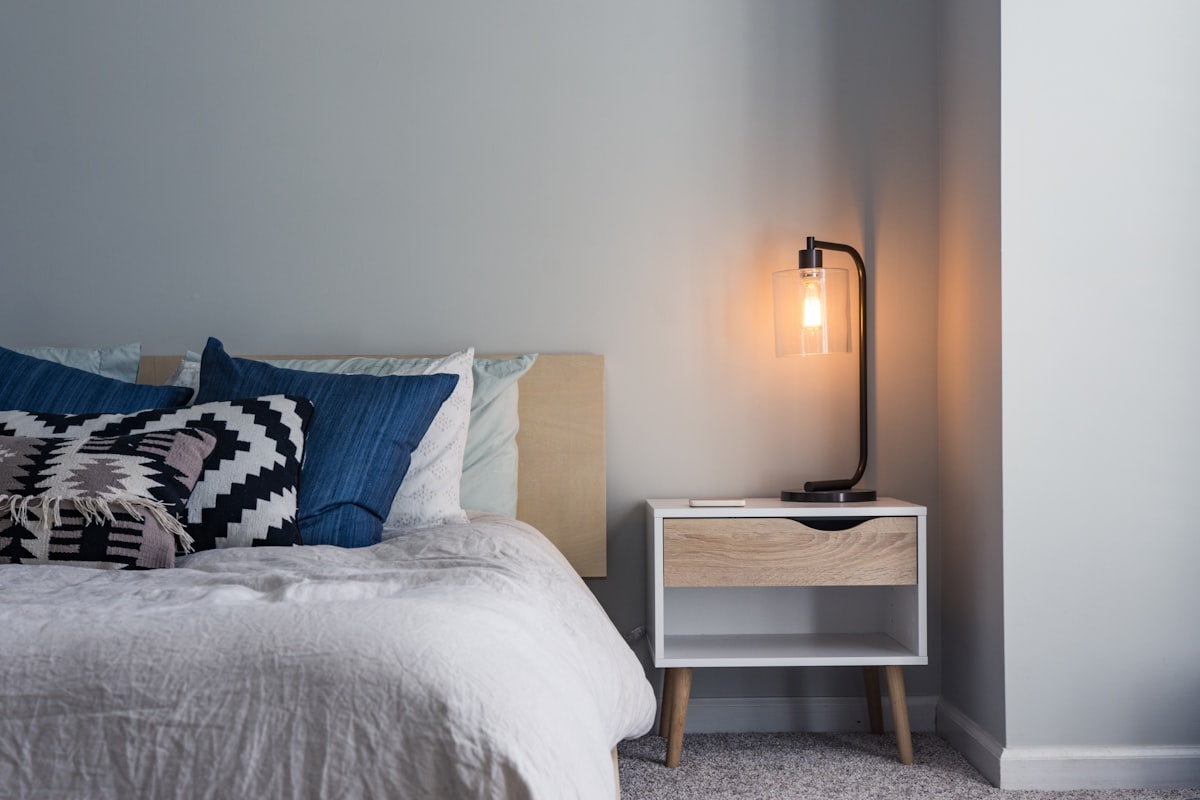
Once the room is actually dark, the last light standing is whatever you
read by, and a bedside lamp on a low
setting finishes the setup without undoing it.
Darkness is only half of a good night's sleep. Our sheets for hot sleepers guide covers the temperature half, and our small bedroom layout guide handles the rest of the room.