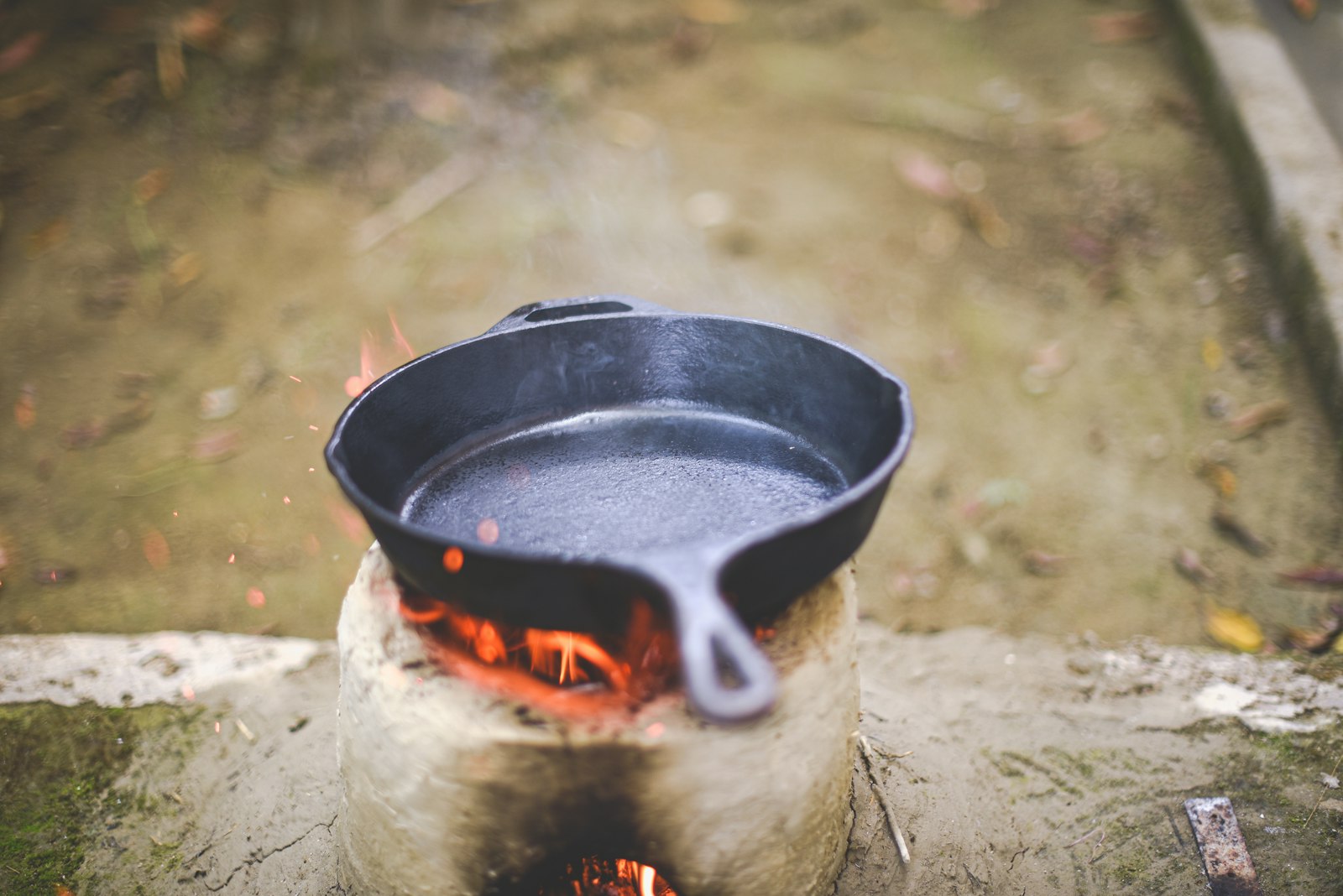
A properly seasoned cast iron skillet carries a layer of nonstick
coating measured in microns. Not a metaphor: the polymerized oil film
that makes eggs slide is a fraction of the thickness of a sheet of
paper, which is why the whole subject is so easy to get wrong. People
treat seasoning like paint, something to slather on and hope for, when
it behaves like varnish: it is a chemistry-controlled reaction with
exact tolerances, and almost every failed cast iron pan fails one of
two measured variables, oil layer thickness or pan temperature. Judge
it by the numbers and the folklore falls away.
What seasoning actually is
Seasoning is oil that has been heated past its smoke point until the
molecules bond to each other and to the iron, a process called
polymerization. The result is a hard, dry, plastic-like film bonded to
the metal, and it builds in layers with use. Two numbers decide whether
it works: how thin the oil goes on, and how hot the pan gets. A coat
you can see is a coat that will pool, stay soft, and eventually flake;
the instruction that survives every test is wipe the oil on, then wipe
it off as if you changed your mind, until the pan looks barely oiled at
all. The temperature needs to be above the oil's smoke point for the
bonding reaction to run, which is why the common advice to season at
450 to 500 degrees Fahrenheit with an oil like grapeseed or canola
works, and why finishing the cycle in a 450-degree oven for an hour,
then letting the pan cool inside, produces a film that survives a
dishwasher attack better than any wipe-on anecdote ever will.
Flaxseed oil deserves its reputation and its caveat: it polymerizes
into the hardest film available to home cooks, and it also flakes when
applied in anything thicker than a micron-level haze, because that hard
film has almost no flexibility. On paper it is the best oil. In
practice, for a first-timer building a base coat, grapeseed or plain
canola is the more forgiving chemistry.
Daily cleaning: the part everyone overthinks
The routine is four steps and takes under a minute. Wash the pan, soap
included; modern dish soap has no effect on polymerized oil, and the
lye-soap warning belongs to the 1930s. Scrub anything stuck with a
chainmail scrubber or a scouring pad, because it is stuck food, not
seasoning; the seasoning film is harder than the crust on it. Dry the
pan on a lit burner for a minute, because air-drying is how rust gets
its invitation: bare iron exposed by a thin spot plus standing water
equals orange by morning. Finish with a few drops of oil wiped across
the warm surface and wiped back off, the same barely-there coat as
seasoning.
What actually strips seasoning is not on this list, because it is not
in the sink. It is in the oven cycle done too hot and too thick, it is
tomato sauce simmering for two hours in a pan with a young, thin film
acidity can penetrate, and it is thermal shock, a hot pan met with cold
water, which can crack the seasoning layer and in the worst case warp
the iron itself. Let the pan cool for a few minutes before it meets
water.
Rescue operations
Rust and sticky patches are both repairable, and the order of
operations matters.
Rust. Scrub the orange off with steel wool or a scouring pad; it is
surface oxide, not lost iron, and a light pass at the sink removes it.
For heavy rust, a fifty-fifty white vinegar and water bath eats the
oxide fast, which is exactly the problem: vinegar also eats iron, so
the soak is checked every fifteen minutes and never runs overnight. One
deep-dive forum story after another ends with a pitted pan because the
soak was left while the cook went to work. Once the metal is bare gray,
dry it immediately and reseason from scratch, three or four thin oven
cycles.
Sticky or patchy surface. Stickiness that survives proper
preheating means soft, under-polymerized oil sitting on top of the
seasoning, almost always from too-thick coats. Scrape the soft material
off with a metal spatula while the pan is hot, scrub the area hard, and
run a fresh thin oven cycle. Repeat rather than escalating: one
correctly executed cycle fixes what five sloppy ones caused.
When to strip completely. Only when the base is beyond patching:
flaking across the whole cooking surface, or buildup so thick the
interior feels bumpy under a spatula. Oven cleaner on a bagged pan or a
self-cleaning oven cycle takes it back to bare iron, and then it is a
new pan with a new pan's schedule.
Common mistakes
- Oiling thick and baking once. A visible coat pools, cures soft,
and flakes. Thin coat, wipe it off like a mistake, repeat.
- Below the smoke point. Seasoning at 350 degrees with a
high-smoke-point oil does nothing; the polymerization reaction needs
the heat. Follow the oil's number, not the habit.
- Fear of soap, acceptance of soak. Soap is harmless to bonded
film; an hour of standing water is not. The sink mistake is the
opposite of the traditional one.
- Cold water into a screaming-hot pan. Thermal shock cracks
seasoning and can warp the iron. A cracked film lifts, and the lift
becomes rust within a week.
- Storing damp or stacked wet. Moisture against iron with a thin
film is the exact recipe for the orange dust. Dry on heat, store dry,
paper towel between stacked pans.
- Babying the pan. A skillet used weekly for fried eggs, cornbread,
and sears maintains its seasoning better than one kept for display.
Use is maintenance.
The whole system reduces to three numbers: a wiped-invisible film, a
temperature above the oil's smoke point, and a dry pan at bedtime.
Everything else, the soap debate, the flaxseed mystique, the
no-metal-utensils folklore, is noise around a reaction that is fully
understood and was industrialized a century ago. A cast iron pan is the
cheapest cookware in the kitchen and the most repairable; treat the
seasoning like the micron-thin varnish it is, and the pan outlives the
cook.