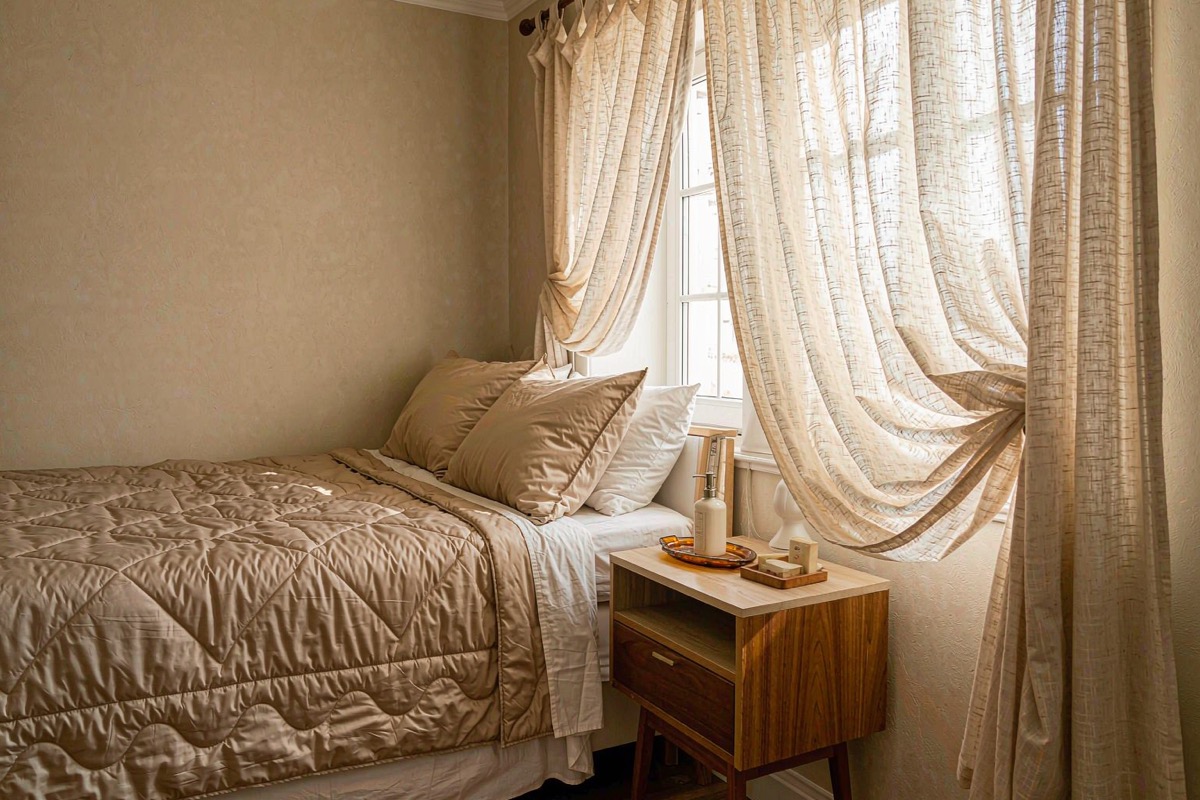
Run a hand across a $400 comforter and then across a $40 one, and the
difference announces itself before you know any vocabulary: one springs
back, one lies there. What your hand is actually reading is a short list of
construction decisions — the loft of the fill, the weave of the shell, the
pattern of stitching that holds one against the other. None of them require
a luxury budget to understand, and all of them are printed or implied on
every product page in the category. The Bedsure comforter set, a
prewashed down-alternative set that retails around $84 and routinely sells
near $42, is a useful cheap-case reference here: it gets two of the three
variables genuinely right, and the one it misses explains exactly why it
feels like a budget product.
Fill: loft is the product
The warm part of any comforter is trapped air. Down insulates because each
cluster holds thousands of tiny air pockets, and fill power — the volume one
ounce of down occupies — measures exactly that. A 700-fill-power comforter
lofts higher and traps more air than a 500 one at the same weight. Real down
is graded this way; polyester fills never are. Down-alternative comforters
are sold on fill weight per square yard instead, and this is the single
most important number a synthetic-fill listing can give you. The Bedsure
set is deliberately lightweight — owners consistently describe a balanced,
never-suffocating weight, which is the selling point — and that same
lightness is why sleepers who want a heavy, cocooning drape call it too
thin. Both camps are describing the same spec from opposite sides.
Fiber structure matters too. Clustered polyester fibers that mimic down
loft and recover; flat fiberfill mats with age. Listings rarely name the
fiber shape, but the owner record reveals it over time: reviews of the
Bedsure set repeatedly note the fill staying reasonably even through
multiple washes rather than clumping into corners, which is the behavior of
a decent synthetic fill cared for correctly — more on that below. A
comforter that arrives plush and dries into flat patches after the second
wash has told you its fill quality, whatever the listing claimed.
Shell: the weave decides how it drapes
The shell is the fabric you actually touch, and two variables dominate it:
fiber and weave. Budget comforters almost universally use brushed
microfiber — polyester woven fine, then abraded to raise a soft nap. The
Bedsure set does, prewashed so it feels broken-in out of the package, and
that prewash is a real quality touch at this price. The trade-off is drape:
microfiber is tight and slightly papery compared to cotton, so it tends to
lie against the body rather than float. Cotton shells — percale or sateen
weaves over the fill — cost more because the fabric itself costs more, and
they read as "expensive" partly for that reason: cotton breathes, drapes
with more movement, and softens instead of pilling.
Weave density is the hidden variable. A denser weave keeps fill fibers from
poking through and dust from settling in, but too dense and the shell
becomes stiff and crinkly. This is where certifications earn their place:
the Bedsure fabric carries Oeko-Tex Standard 100, meaning the textile was
independently tested for harmful substances. That is not a softness
certificate — it is a chemistry one — but on a $42 set it is unusual and
worth noticing, because shell fabric is where cheap manufacturing cuts show
up first.
Stitching: the shape the whole thing holds
The third variable is geometry. Sewn-through construction stitches shell to
lining in a grid, creating cold spots at every seam; baffle-box construction
adds interior fabric walls so the fill can loft to full height with no
compressed seams. Baffles are what a premium down comforter is mostly
paying for. Budget sets are sewn-through because it is fast, and many use a
simple diamond or square stitch. The practical consequence shows up over
years: every stitch line is a place fill cannot migrate across, so dense
stitching keeps distribution even — the flip side of the clumping problem.
A comforter with wide open channels is the one that ends up all corners, no
middle.
One more construction detail matters more than any brochure admits:
dimensional allowance. The Bedsure standard queen is cut generously for the
price bracket, and the oversized queen measures a full 98 by 98 inches with
corner loops for duvet use. A comforter cut small pulls at the corners,
slips off mattress edges, and reads cheap even when the fill is good —
coverage is a spec, and the extra inches are why some sets look tailored
and others look shrunken. The same sizing logic decides whether the
reversible backing coordinates visibly, as the Bedsure sets' two-tone
design intends, or peeks out awkwardly.
The set structure itself is worth a quick decode, because listings count
pieces in ways that surprise people. Twin and twin XL versions ship as
2-piece sets — comforter plus a single sham — while full, queen, king and
California king configurations are 3-piece with two shams. A guest room
dressed from a twin set will look half-finished for reasons that have
nothing to do with quality; read the piece count before ordering, not the
category name.
What the budget case teaches
Judge any comforter set, cheap or expensive, by the same three checks. Ask
for fill weight or fill power — a listing with neither is hiding the
cheapest component. Read the shell material and ask whether the softness is
a weave you will enjoy for years or a brush finish that washes out. And
look at the stitch pattern: tight grid means even fill, baffles mean loft,
wide channels mean clumps. Care instructions belong in the same judgment —
machine wash cold, gentle cycle, tumble dry low is genuinely simple, and
the owner record on washability is one of the strongest themes in the
Bedsure feedback. The expensive set differs from the budget one mostly in
loft and drape; the bad set differs in everything, and now you know which
variable is which before the price tag tells you how to feel.